
See all, hear all, speak all — the noisy cycle of now.
- Jeetendra khatri
- Oct 2, 2025
- 3 min read

A Thought Piece for This 2nd October 2025
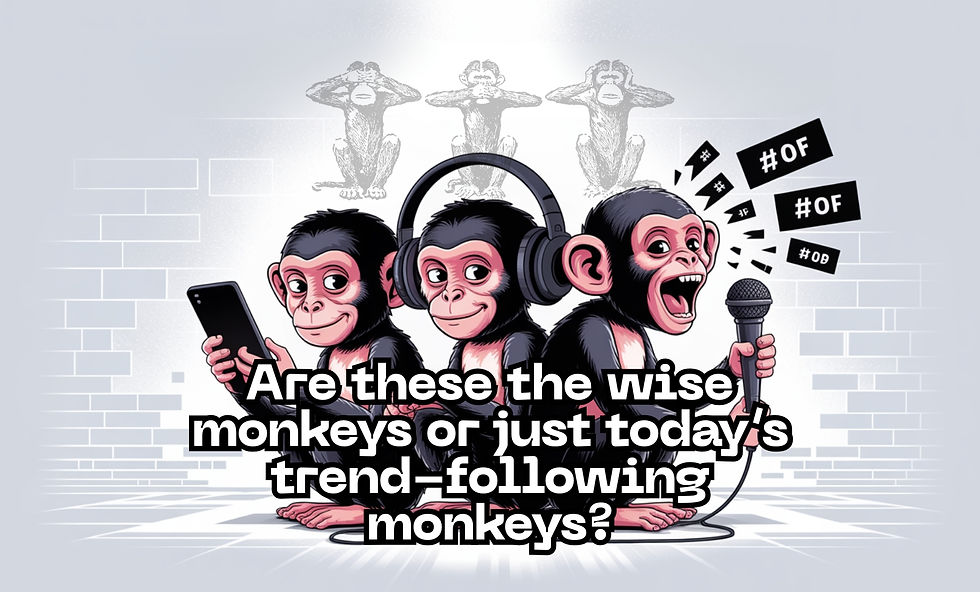
Intro with Noisy
Once, Mahatma Gandhi’s three monkeys gave us the simplest yet deepest lessons: see no evil, hear no evil, speak no evil. They were not just symbols, but guiding values for society—teaching us discipline, restraint, and responsibility. But today, in the noise of social media and the chaos of modern politics, their meaning seems reversed. Instead of protecting ourselves from corruption and negativity, we often welcome it in the name of freedom, entertainment, or even survival.
noisy
This shift is not small—it is reshaping how people think, act, and even stay silent.
To understand where society stands today, we must look again at these three monkeys, but through the lens of the 21st century.
1. The Social Media Mirror
Social media began as a celebration of talent and creativity. From comedy skits to inspiring dances, from knowledge-sharing reels to powerful storytelling—ordinary people found extraordinary reach. In this, Mahatma Gandhi’s lesson of see no evil was alive, people chose to see and share positivity.

But slowly, fame became currency. Vulgarity began to disguise itself as “talent.” Children copied adult trends, creators shouted louder instead of thinking deeper, and audiences rewarded shock over skill.
The cause is simple:
when numbers matter more than values, people will do anything for attention.
The effect?
Society begins to confuse noise with art, and vulgarity with creativity.
2. The Silent Politics of Today
This reversal is not only on screens but also in politics. Across the world, many citizens feel frustrated with how democracy is being used. Instead of raising honest voices, most remain silent—out of fear, or simply because money and convenience seem more important than truth.

Here too, Mahatma Gandhi’s monkeys have changed forms:
See everything but pretend nothing is wrong.
Hear injustice but remain quiet.
Speak only what keeps you safe, or what earns you profit.
The cause is fear and control. The effect is silence, where people accept whatever comes rather than demand better. Indirectly, society trains itself to normalize wrongs, until even the act of questioning feels dangerous.
3. A Question of Balance
The bigger question is,
what do we really want to encourage as a society? Do we want to celebrate talent, wisdom, and honest voices—
or do we want to reward vulgarity, noise, and silence?
Talent without discipline is empty.
Freedom without responsibility is chaos. And
democracy without courage becomes a cage.
If Mahatma Gandhi’s three monkeys could see us today, perhaps they would not close their eyes, ears, or mouths—they would instead ask us to use them with wisdom.
The world has enough platforms, enough voices, and enough talent.
What it lacks is balance, courage, and direction.
Mahatma Gandhi’s three monkeys were never about ignoring reality—they were about choosing wisely what we see, hear, and say.
In today’s time, this wisdom matters more than ever. As creators, as audiences, and as citizens, we must decide,
Do we want to strengthen noise, vulgarity, and silence—or do we want to give value back to truth, dignity, and talents?
Because in the end, societies are remembered not for their distractions, but for the principles they stood by.
Finally, a note of clarity:
What I have described so far targets the visible, money-driven spectacle—people of all ages chasing easy cash, fleeting fame and indulgence.
This paragraph is for those who can change course: parents, teachers, community leaders and creators who choose dignity over clicks. If we redirect energy into education, honest work, technology and meaningful opportunities, we can meaningfully reduce sexual violence, crime and other social harms.
I will not spend words naming or shaming those who profit from the corruption; many are beyond persuasion, and repeated appeals from well-meaning voices have failed to move them. Read this closely and act locally—clean your neighbourhoods, build real growth, and help steer the next generation toward respect, skill and purpose.


Comments